
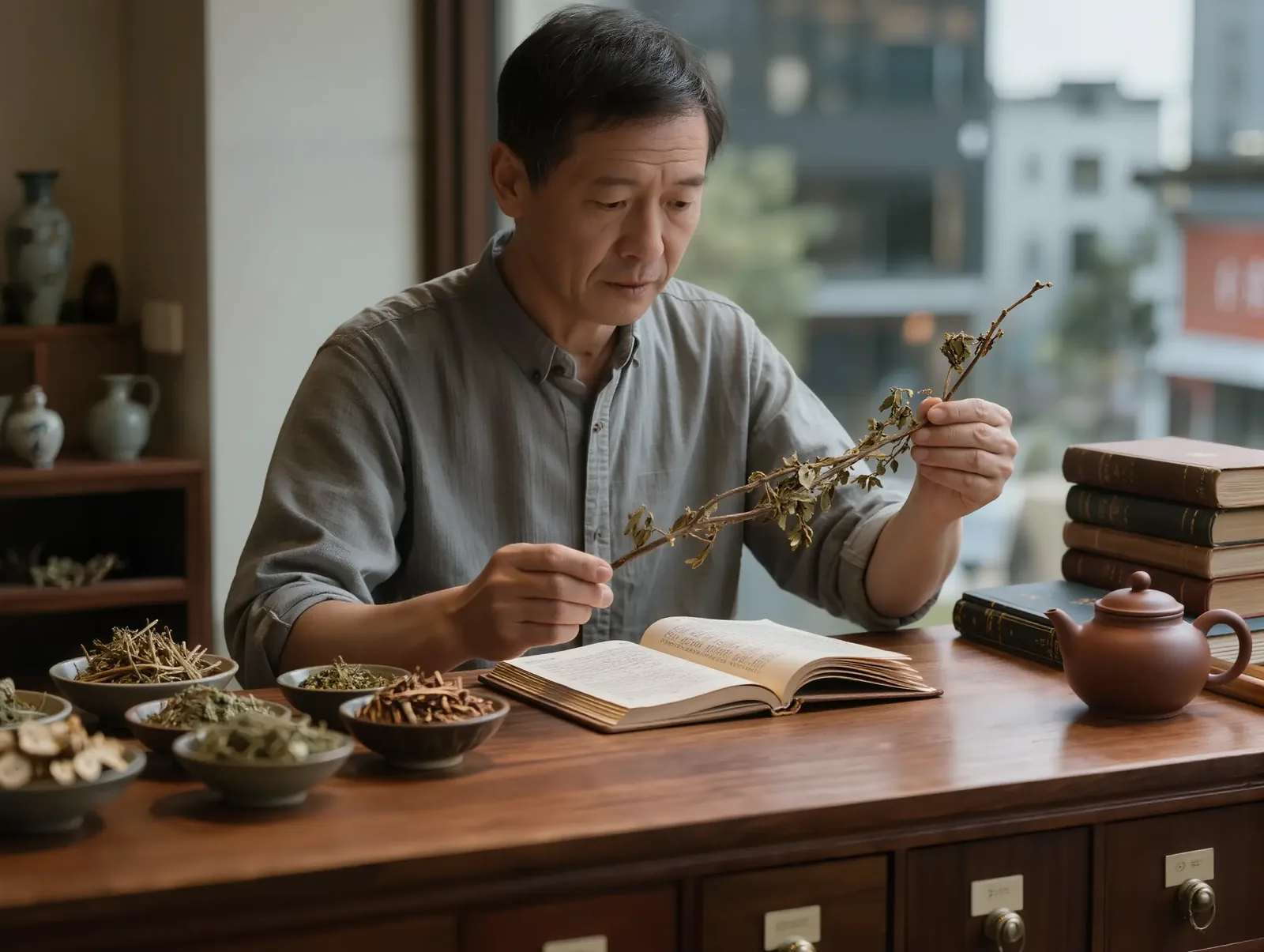
A family of Chinese medical traditions
Chinese medicine
Chinese medicine is a historically layered family of theories, diagnostic practices, materia medica, acupuncture and moxibustion, bodywork, movement and dietary practice. Acupuncture is one branch, not a synonym for the whole system.
WORLD-TCMReviewed 2026-07-29Version 2026.07.18.14Conceptual language
Qi, blood (xue), essence, fluids, zang-fu, channels, yin-yang and five-phase relationships form a language for patterns and change. Meanings vary across texts, periods and schools. Qi should not be presented as an already established Western physical energy unit; that translation is a separate hypothesis requiring its own measurement.
Pattern differentiation
Treatment is traditionally selected through pattern differentiation rather than only a biomedical diagnosis. Observation may include symptoms, tongue, pulse, constitution, season and context. Herbal formulas are multi-ingredient and commonly modified. Research that names only 'TCM' without formula, needling protocol, practitioner training and comparator is not reproducible enough for a precise conclusion.
Evidence by component
Acupuncture, tai chi, qigong and Chinese herbal products have different evidence and risk profiles. Some pain and quality-of-life outcomes have positive signals; herbal results are mixed across conditions and products. Sham controls, practitioner effects, blinding, expectancy and protocol heterogeneity require explicit treatment rather than one global score.
Safety and regulation
Sterile technique and anatomical training matter for acupuncture. Herbal safety depends on correct species, processing, dose, contaminants, undeclared pharmaceuticals and interactions. Rules for practitioners and products differ by jurisdiction; a legal product status is not a finding of clinical effectiveness for every claimed use.
Research agenda
Useful next studies need precise formula and batch identity, treatment rationale, practitioner competence, adverse-event capture, credible controls, patient-centred outcomes and enough follow-up to distinguish transient response from durable benefit.
Evidence
What this page can tell you
This is an orientation to a whole tradition or field, not proof that every treatment works. Specific practices, products and outcomes must be assessed separately, with uncertainty and source quality kept visible.
Visible safety boundary
Use context before action
Use sterile, single-use needles from a qualified practitioner. Verify herbal identity and quality. Pregnancy, anticoagulants, liver or kidney disease, surgery and treatment of children require specific clinical and interaction review.
Continue exploring health
Choose another health perspective.
Move between traditions and topics without being diverted into commercial or administrative pages.